
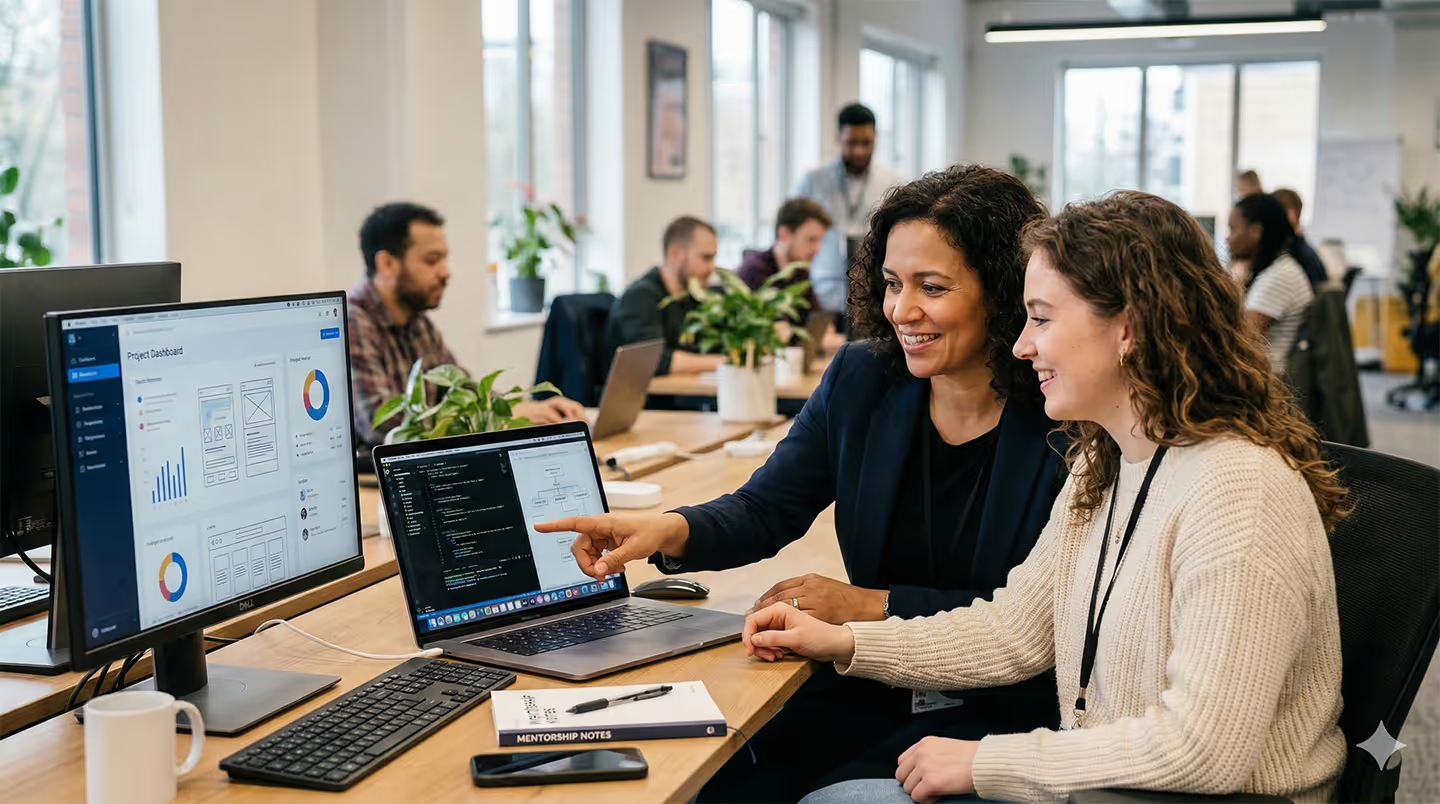
Mentoring Women in Tech: A Conversation with Victoria Foxley-Sayles and Grace Giles
Why mentorship matters. We've got the insight from a mentor and mentee about their recent experience.

Mentorship can be transformative—especially in industrieswhere women remain underrepresented. At Aire Logic, the mentoring relationshipbetween Victoria Foxley-Sayles and Grace Giles demonstrates how guidance,advocacy, and determination can open new career pathways.
We spoke to both mentor and mentee about whymentorship matters, how it helped Grace transition from talent into delivery,and what advice they would give to others considering mentoring.
What first made you interested in mentoring?
Victoria Foxley-Sayles:
Women in tech are still underrepresented, and because of that we often facea harder time gaining respect and progressing in our careers. In many cases,women’s career paths can take longer than those of our male colleagues.
Mentoring is about helping younger or less experienced womenprogress faster by giving them the support that I didn’t always have when Istarted out. I’ve been lucky to have a few key people in my career who took thetime to share their experiences and recognise my potential. Those moments—likewhen I transitioned from waterfall to agile—really shaped my career.
Mentoring feels like a natural way to give back. Mydefinition of success is when, years down the line, a mentee says: “Mymentor once told me this…” or remembers something we discussed that helpedthem solve a problem.
The best moment for me is the “penny drop” moment—whensomeone finds their own solution after a bit of guidance. That’s when you knowthe mentoring is working.
Grace, can you tell us about your mentee journey andcareer change?
Grace Giles:
I’d been working in talent at Aire Logic for about two or three years andhad reached a point where I could do the role well—but I needed a new challengeto stay motivated.
When I looked at my skillset, especially the people-focusedside of recruitment, I realised there was a lot of overlap with delivery roles.I’d already worked with Vikki through the events committee, so I asked if shewould mentor me while I explored moving into delivery.
At the start, we had weekly sessions where we coveredeverything from agile principles and delivery structures to ceremonies andproject management basics. I also created a “sandbox” within the talent team byintroducing Scrum ceremonies like stand-ups, sprint planning, andretrospectives for project work.
Later, I moved into a dual role as Scrum Master in Air Labswhile still working in talent. That gave me experience working alongsidedevelopers and managing project ceremonies in a more technical environment.
Eventually, an opportunity came up in one of the Spine coreservices teams. Because I already had relationships with stakeholders throughmy talent role, the transition was smoother. Now I’m working as a DeliveryManager, and Vikki and I still have weekly mentoring sessions to discusschallenges and development.
Would the transition have been harder without a mentor?
Grace Giles:
Absolutely—100% harder.
Changing careers is incredibly difficult, especially whenyou’re trying to move into a new field without the traditional experience orkeywords on your CV. Vikki didn’t just mentor me,she advocated for me.
She used her senior voice to push for opportunities, whetherthat was getting me into Aire Labs, supporting training, or ensuring I gotproject experience. Without that advocacy, the opportunity could easily havegone to someone else.
How important was your support network?
Grace Giles:
It was huge - and interestingly, it was entirely female.
Vikki was mentoring me, our talent lead fully supported thetransition, and Jade,my project lead, created the opportunity for me in thedelivery team. All three played a part in helping make the transition possible.
It was also the first time Aire Logic had supported someonemoving internally from an operations role into delivery, so it felt like wewere pioneering something.
I hope it shows other people in the company, especially women, that internal career changes are possible if you’re willing to put inthe work and push for it.
Has this experience inspired you to become a mentor yourself?
Grace Giles:
Definitely. I can’t wait until I’ve built up enough experience to give thatsame support to someone else.
Having someone push you towards a goal and believe in youlike that is incredibly powerful. Being able to provide that for someone elsein the future would be really rewarding.
Who benefits most from mentoring?
Victoria Foxley-Sayles:
Honestly - anyone.
Mentoring is particularly valuable for people early in theircareers or those going through a transition, but it can benefit anyone whofeels uncertain, stuck, or lacking confidence.
It provides a safe space to talk things through, exploreideas, and get a different perspective. Having someone in your corner whosupports you and has your back makes a huge difference.
Grace Giles:
Even senior people can benefit. Sometimes just hearing a differentperspective helps you think about a problem in a completely new way.
What were your biggest learnings from the experience?
Grace Giles:
The biggest shift for me was mindset.
In recruitment, the work is very reactive - when a rolecomes in, you respond. In delivery, you have to think much more proactively,looking ahead and anticipating potential issues before they happen.
Instead of doing everything myself, my role now is aboutsupporting a team and making sure everyone has what they need to succeed.That’s been a steep learning curve, but a really rewarding one.
Victoria Foxley-Sayles:
For me, it reinforced the power of open and honest conversations. Mentoringworks best when there’s trust and a safe environment where the mentee can speakfreely.
It’s also about helping someone realise they’re more thanjust their strengths -they’re capable of growing and evolving beyond what theymight initially believe.
Every career journey is different, and mentoring helpspeople navigate that change.
What advice would you give mentors and mentees?
Grace Giles:
For mentees, it’s important to be willing to learn and commit to theprocess. Career changes aren’t always straightforward, and there will bemoments where things feel difficult.
Having the determination to keep going makes all thedifference.
Victoria Foxley-Sayles:
For mentors, the key is to listen rather than solve everything.
A mentor’s role isn’t to provide all the answers -it’s tohelp the mentee find their own. It’s a bit like teaching someone to ride abike. You’re there supporting them, guiding them, but eventually they ride ontheir own.
The most valuable things a mentor can offer are perspective,encouragement, and thoughtful questions.
For mentees, the most important things are openness,curiosity, and taking action between conversations.
What has been your favourite part of the mentoringexperience?
Grace Giles:
Aside from changing my career, it’s been building a strong mentor–menteerelationship.
It’s incredibly reassuring to have someone in your cornerwho will support you and listen, even when they don’t necessarily have theanswer.
Sometimes just saying something out loud helps you find thesolution.
Victoria Foxley-Sayles:
My favourite part has been watching Grace grow.
Seeing her go from uncertainty about becoming a DeliveryManager to actually achieving that goal was incredibly rewarding. That firstday in the role was a real “we did it” moment.
Now I’m excited to see her confidence continue to grow asshe tackles challenges independently.
What stops people from becoming mentors or mentees?
Grace Giles:
From a mentor perspective, people sometimes worry they don’t have enoughtime or experience.
For mentees, it can feel intimidating to ask for help oradmit you’re struggling.
Victoria Foxley-Sayles:
Exactly. Confidence and time are the biggest barriers.
Many people don’t realise their lived experience is exactlywhat someone else needs to hear. And asking for support isn’t a sign offailure—it can actually be incredibly empowering.
Mentoring is simply a structured conversation built on trustand mutual respect. When done well, it can be hugely liberating andcareer-boosting.
